This is an unweighted algorithm.It might not result in shortest path always.
Also an unweighted algorithm. Searches for its neighbours across the breadth first.
The fastest algorithm, providing the optimal combination of Dijkstra & Greedy-best first search, by making a smart look-ahead decision to propagate!
It is an informed search.Which makes a sound choice of path based on a cost function. Implemented using a Priority Queue.
worst case time: O(n*logn)
Similar to Dijkstra's but starts, from both the end points, thus reducing the search time by a factor of square root
Faster than standard BFS, since search starts in BFS pattern, from both the ends.
A* implemented from both ends.
Standard A* tweaked with the feature of varying weight parameters in its heuristics
This is the most prude, but obvious approximation of the multiple end points problem. Many real world graphical application companies, deploy an advanced version of this TSP approximation, to route in a graph with multiple destinations!
Please select an Algorithm first & then visualize
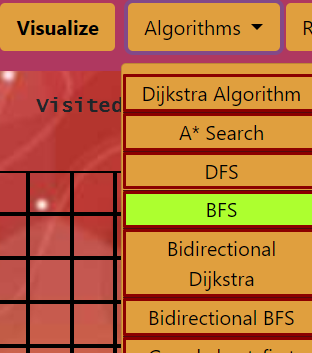
To try with more than one end points, click on the first toggle switch of multiple destinations.

Now keep on adding, as many destinations as you like, after clicking on the "Add Destination" button.
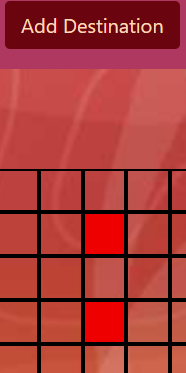
You can also change the speed of animation, using the speed selector button at the end of the row
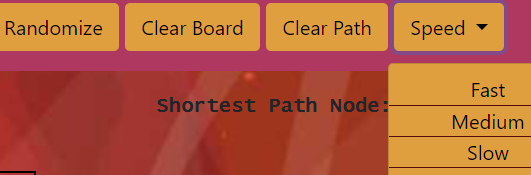
Additional features
You can reset the board by clicking on "Clear Board" button.
You can reset the path by clicking on "Clear Path" button.
Randomize
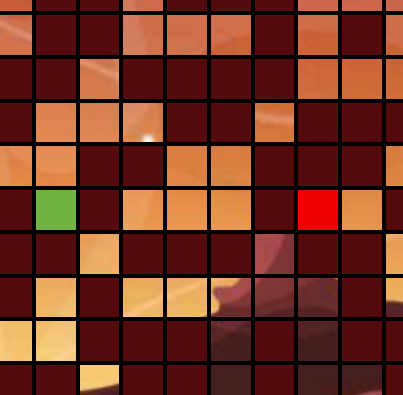
You can generate a random grid by clicking on the respective button.
Or you can draw a pattern of the walls as you desire,with a free hand,on the grid, with a down pressed mouse click.
For more information about the algorithms, click on the info button, to the right end of the page.